
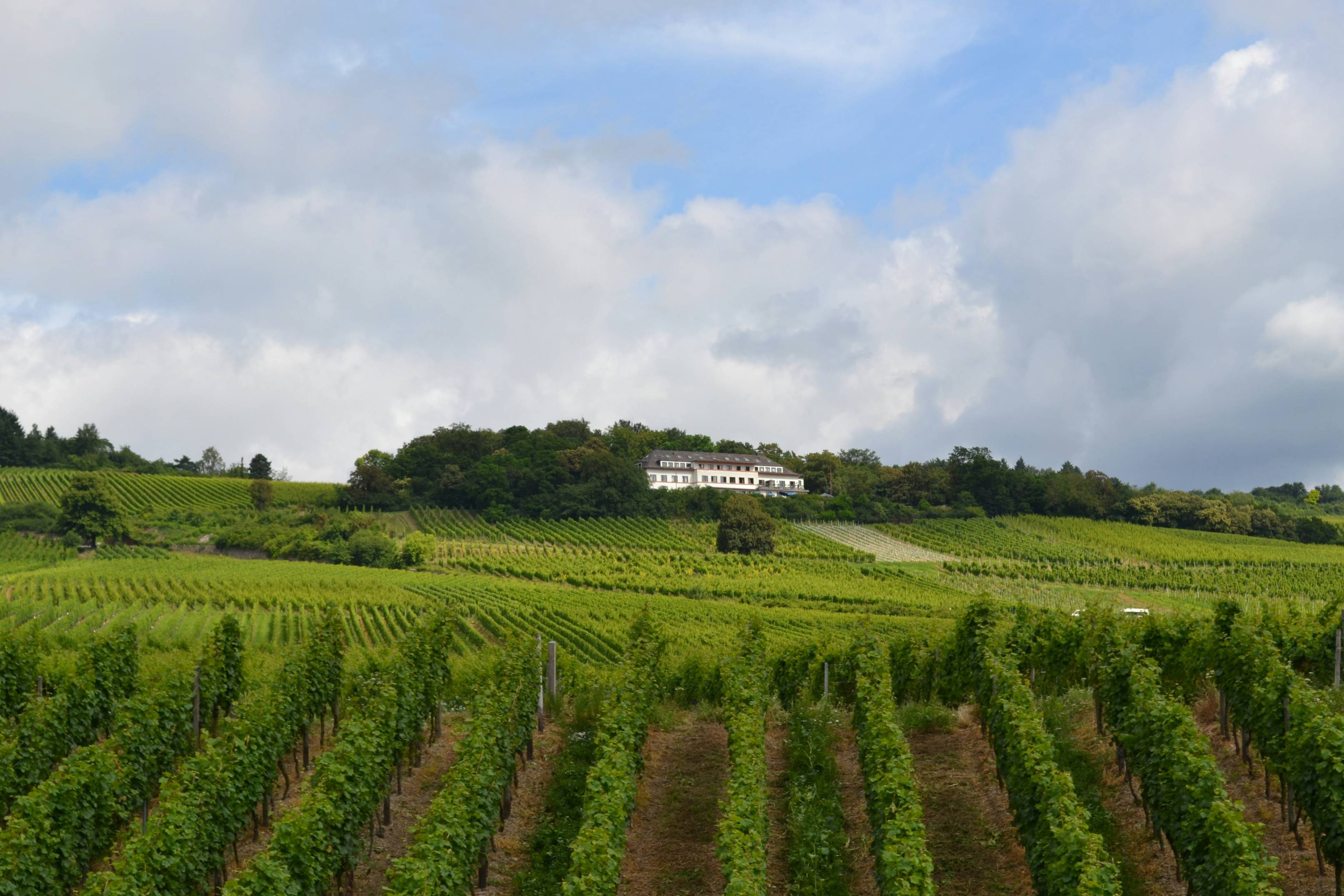


Continuing our journey on the orographic left of the Sesia past Ghemme, we find the town of Sizzano. Here two young winemakers, Paolo Cominoli of Cantina Comero and Paride Chiovini have rediscovered the ancient vineyards of their grandparents. Paolo’s grandmother still works the vines daily.
Both make the Sizzano DOC wine, a blend of Nebbiolo, Vespolina and Uva Rara. The Nebbiolo grape remains predominant and integrates wonderfully with Vespolina and Uva Rara (Bonarda Novarese). The soil is similar to that in Ghemme. It is in fact the same fluvioglacial morain, even if here the hills are lower, more distant from the mountains and the soil is sandier.
The result is slightly softer wines. Moreover, the red grapes of the area converge in the Sizzano, while the Ghemme is often obtained only from Nebbiolo grapes. In this sense, Sizzano is very similar to its neighbour, Fara.The Fara DOC wine we discovered with immense pleasure is Barton by Gilberto Boniperti. Despite being similar wines, Fara and Sizzano are distinguished by the great harmonic force of the fruit of Fara, while Sizzano is full-bodied, drier and more austere.

These winemakers also produce other wines, of course. Gilberto Boniperti’s Barbera Barblin is particularly appreciated for its elegance, but also Nebbiolo Carlin and Vespolina Favolalunga, are excellent. Paolo Cominoli impressed us with the sharpness of his wines, clearly defined on the basis of the grapes that compose them. Among the reds, Nebbiolo and Vespolina are definitely worth mentioning. Both have a spicy character and pleasant aromatic variety, without lacking in body. The white wine made from Erbaluce grapes is dry and easy to drink, with a brief sugary note towards the end. Paride Chiovini convinces with his interpretation of the Vespolina grape he called Aphrodite, his light red Briseide from Uva Rara grapes and his rosé Eros. Hi Ghemme is 100% Nebbiolo, very balsamic, powerful, yet youthful.
For centuries the wine of these areas was considered of great quality. The Romans praised them and the clerics boasted of having them on their tables. Then, partly because of the cooling of the Alps in the second half of the 1800s, the phylloxera epidemic in the 1870s, and above all because of massive industrialization from the 1950s, man progressively abandoned the vineyards. In the 1890ies, vineyards covered around 42 thousand hectares of land. In the 1980s, it was less than 700.
OUR WINERIES

GILBERTO BONIPERTI
Our first visit of many in the “Alto Piemonte” was to Gilberto Boniperti’s cellar. He had harvested some grapes the previous day, crushed them, and was planning to get some more grapes later that day. We instantly liked this man. He showed great passion, and modesty.
